SAP DevOps CI/CD Pipeline Automation

SAP CI/CD

Streamlining Software Delivery — Continuous Integration, Continuous Deployment, and Automated Quality Assurance for the SAP ecosystem.

Explore Principles
SAP CI/CD Pipeline

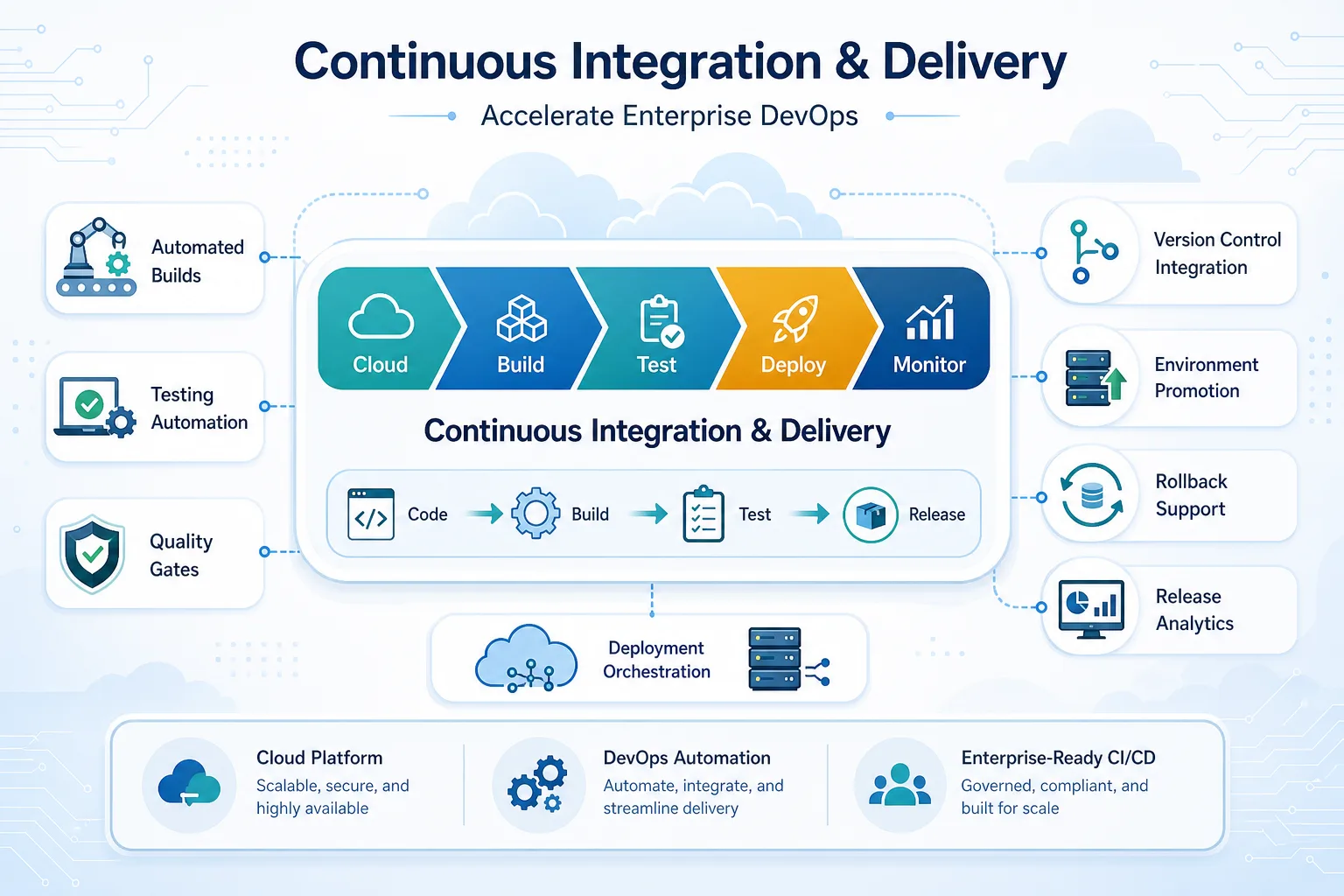
In today's fast-paced world of software development, delivering high-quality applications quickly and efficiently is paramount. SAP CI/CD has emerged as a critical methodology and set of practices to achieve this goal within the SAP ecosystem — emphasizing automation, collaboration, and rapid feedback to deliver software changes reliably.

Key Principles

Automation

Continuous Integration

Continuous Deployment

Version Control

Pipeline Orchestration

Feedback Loops

Understanding SAP CI/CD

Continuous Integration and Continuous Deployment (CI/CD) is a software development approach that emphasizes automation, collaboration, and frequent code integration to deliver software changes reliably and rapidly. In the context of SAP, CI/CD encompasses a set of principles, best practices, and tools tailored to the SAP environment. It aims to streamline the delivery of SAP applications and customizations while maintaining quality and reducing risks.

SAP CI/CD leverages tools like gCTS (Git-enabled Change & Transport System), SAP Cloud Transport Management, and integrations with Jenkins and GitLab CI to automate the complete delivery pipeline.

Key Principles in Detail

Automation

Automation is at the heart of CI/CD. Routine tasks, such as building, testing, and deploying SAP applications, are automated to reduce manual effort and minimize errors. This includes automated unit testing, integration testing, and security scans.


Continuous Integration

Developers integrate their code into a shared repository frequently, often multiple times a day. Automated tests and quality checks are triggered with each integration to catch issues early in the development cycle, significantly reducing the cost of bug fixes.


Continuous Deployment

The goal is to automate the deployment of code changes to production as soon as they pass all tests. This allows for rapid and reliable delivery of new features and bug fixes, with rollback capabilities built into the pipeline for safety.


Version Control

Code is managed in a version control system (e.g., Git) to track changes, collaborate effectively, and ensure code consistency. SAP's gCTS brings Git-based version control natively into the ABAP development workflow.


Pipeline Orchestration

CI/CD pipelines are defined and orchestrated to automate the entire software delivery process, from code commit to deployment. This includes building, testing, and deploying SAP applications through clearly defined stages with quality gates.


Feedback Loops

Continuous feedback loops are established to monitor application performance and gather user feedback. This information is used to drive improvements in subsequent development cycles, creating a virtuous cycle of continuous improvement.
Conclusion

SAP CI/CD is a transformative approach to software development and delivery within the SAP ecosystem. By emphasizing automation, collaboration, and rapid feedback, CI/CD enables organizations to deliver high-quality SAP applications quickly and efficiently. As businesses increasingly rely on SAP solutions to drive their operations, the adoption of CI/CD practices becomes critical for maintaining competitiveness and agility in a dynamic marketplace.

With its proven benefits and adaptability to various SAP use cases, CI/CD continues to play a pivotal role in shaping modern SAP software development — ensuring businesses can innovate and respond to change with confidence and speed.

Automate Your SAP Delivery Pipeline

Our DevOps experts implement gCTS, Jenkins/GitLab CI, and automated testing to streamline your SAP development lifecycle.

Get in Touch